
TOG value: the right temperature when your baby goes to sleep

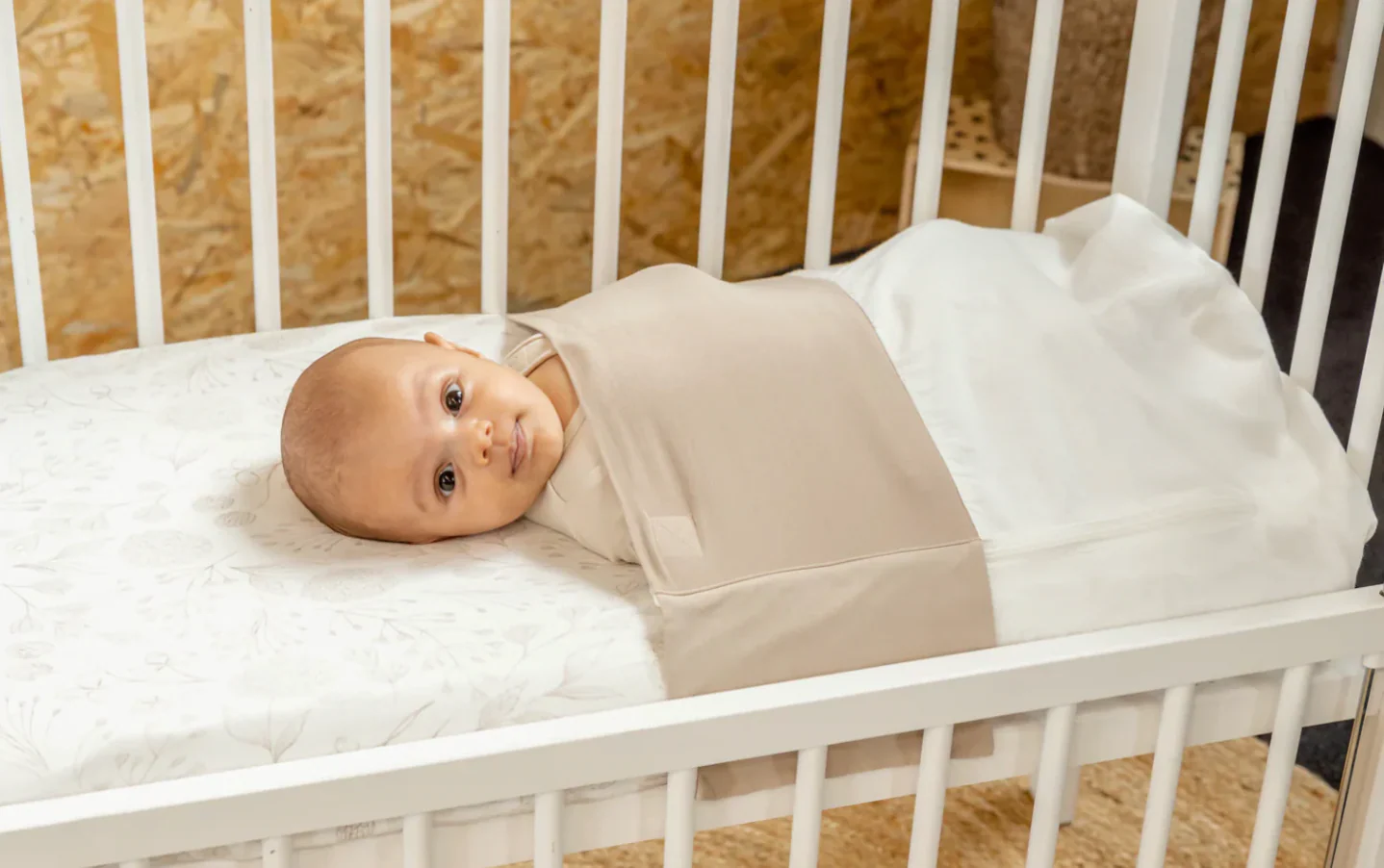
As a parent, you naturally want your baby to sleep comfortably and safely at all times. Temperature plays an important role in this. But how can you estimate if your baby is going to get too warm or too cold? This is where the TOG value comes in. In this article, we explain what the TOG value is, how it is measured, and how you can apply it to create the perfect sleeping environment for your little one.
Let's first establish that every baby is different and that this article is naturally only speaking in terms of guidelines. All adults experience temperature differently, and this naturally also applies to babies. Some get warm quickly, while others are more sensitive to the cold. So don't get completely fixated on these guidelines, but see them as a guide that you can use to explore what best suits your little one.
Wat is de TOG-waarde?
The TOG value (Thermal Overall Grade) indicates how well the fabric retains heat. It is important to know that the TOG value is therefore not dependent on the thickness of the fabric, but on its insulating value. A higher TOG value means the fabric retains more heat, while a lower TOG value means the fabric breathes better and retains less heat. This is therefore independent of the thickness of the fabric.
How is the TOG value measured?
The TOG value is measured by determining how much heat a fabric can retain under standardised conditions. This is done in a laboratory environment, where the insulating properties of the fabric are tested. The result is a numerical value that you can use to compare the thermal insulation of different fabrics.
The TOG value therefore indicates how well the fabric used retains heat. The TOG value says nothing about how your baby might experience this heat. For example, a sleeping bag with long sleeves might have a TOG value of 0.3, while a thick romper might have a TOG value of 0.5. The romper in this example would then retain more heat around the torso, while the arms and legs wouldn't experience this warmth. Therefore, don't just focus on the TOG value of clothing, but also consider, for example, that babies lose heat through their hands and head. A hat in bed is therefore more likely to lead to overheating than a piece of clothing – even if the hat has a lower TOG value.
How do you apply TOG in practice?
Applying the TOG rating in practice means considering the insulation value of all layers your baby wears and sleeps in. This includes clothing, sleeping bags, and bedding. By adding the TOG ratings of these layers together, you can estimate whether your baby will be too hot or too cold.
For example, if you use a sleeping bag with a TOG rating of 1.0 and a sheet with a TOG rating of 0.5, you have a total TOG rating of 1.5. This helps you to determine if your baby will be comfortable at a certain room temperature.
TOG values and temperatures
The warmer the baby's room, the lower the TOG value of clothing and bedding should be. Take a look here for a helpful overview of guidelines:
- Room temperature 25+°C: TOG value 0.5
- Room temperature 23-24°C: TOG value 1.0
- Room temperature 20-22°C: TOG value 2.0
- Room temperature 16-19°C: TOG value 2.5
It's important to realise that in extremely hot conditions, such as 35 degrees Celsius, there's little you can do. It seems logical to undress your baby completely, but when playing outside in the sun, that might not be the best solution either, as the skin is then exposed. I also sometimes see prams where parents have thrown a muslin cloth over them because it's sunny, but that can actually create a greenhouse effect. Not very pleasant for your baby! In these situations, think carefully about what you as a parent consider logical, and don't just look at theoretical figures.
When your baby needs to sleep, it's important that the baby's room isn't extremely warm, for example. Therefore, make sure the curtains stay closed during the day if it's sunny. Is your bedroom cooler than the baby's room? Then it might be worth temporarily moving your baby for this occasion. Only let your baby sleep in well-ventilated rooms.
Lightweight fabrics as a base
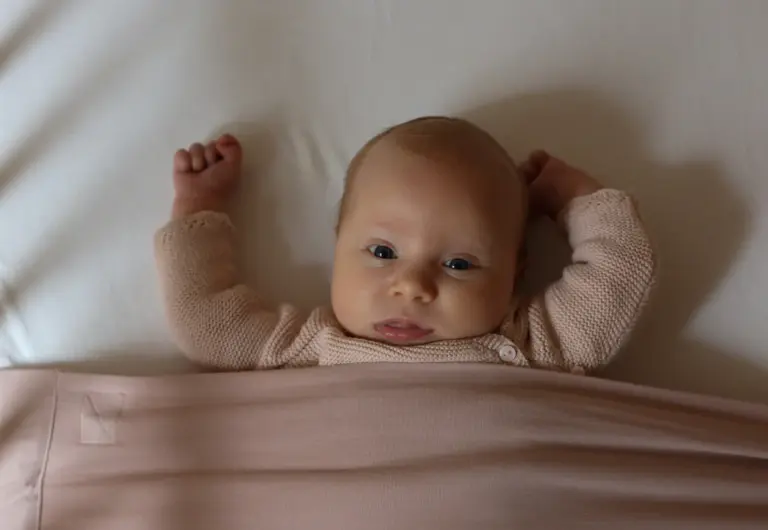
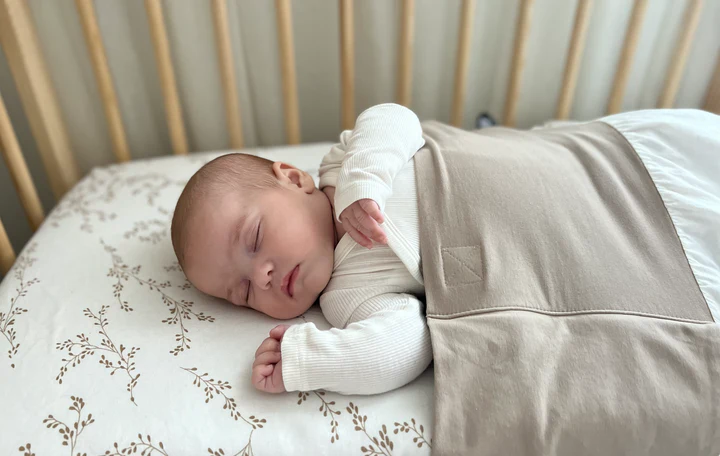
To prevent overheating, at Fedde&Kees we use a fine, soft jersey fabric for our sheets and sleeping bags. This fabric stays nice and cool, breathes well, and doesn't retain heat. This means your baby stays comfortable, even in warmer conditions. Our fabrics have a low TOG rating, which forms an ideal base for sleep. Would you like to know why a low TOG rating base is the best choice in our opinion, then also read this article: Why a low TOG rating makes a difference.
TOG is a handy tool
In short, the TOG value is a useful tool for creating the right sleeping environment for your baby. Use the guidelines above as a starting point, but always continue to monitor your baby's temperature closely. It is preferable to choose airy fabrics and multiple layers, so you can quickly add or remove warmth. Good luck!
Lots of love,
Frederieke


 Nederlands
  English (UK)
  Deutsch
  Français