

6-month jump: my baby won't sleep anymore


The 6-month leap is a really intense one. Your baby will have already gone through an enormous amount of development in the first six months, but from 6 months onwards, the real thinking can begin. Unfortunately, this ‘brain growth spurt’ can lead to your little one suddenly having a lot more trouble sleeping. What exactly happens during this leap? What can you as a parent do to make this period easier? Read all about the 6-month leap and your child's sleep behaviour in this article.
What happens during the 6-month sleep?
Something important happens during the 6-month sleep regression. In this phase, your baby learns to see the relationship between different events. During the 4-month leap Has your baby already learned to recognise events? This knowledge is now being extended with the ability to perceive and understand relationships between different things. Your baby is understanding for the first time how objects and events relate to each other.
The loose puzzle pieces are now falling into place and the world suddenly looks very different! This is a big change, which your baby often needs some time to adjust to. During the 6-month leap, your baby may therefore become more tearful and clingy. This clingy phase lasts about 4 weeks for most babies, but it's possible your baby might only need 1 week or could need as long as 5 weeks.
New skills
Now that your child understands that events and objects can (or might) be related to each other, your baby will start experimenting with this. A simple example is discovering that you can place a block in, behind, on, or under another block. To let your baby play with this, you can set down a basket or box full of toys. Your child will try to take objects out of the basket, place them next to it, and put them back in the basket.
Week 29 and 30: fear of distance
After week 26, most babies become happier again because they understand the world better. A few weeks later, something else happens: your baby now understands that when you walk away, you increase the distance between you. This is a consequence of the new way of thinking they developed during the leap. Due to this new realisation, your baby might suddenly find it very distressing when you walk away and ‘leave them behind’. This is why your little one might start crying when you leave the room. They are experiencing separation anxiety and really want to stay close to mum. This might feel like a step backwards, but in fact, this clinginess is a big step forward.
What can I do?
As with any leap, it is important to understand that your baby is struggling. Therefore, take your baby seriously! Don't think they are faking it, but offer comfort when needed. Here are a few tips to help your little one slowly get used to the idea that mummy isn't always in sight:
- Tell Let your baby know exactly what's happening: announce that you're leaving for a moment, explain what you're going to do, and say you'll be back afterwards.
- Keep talking sing as you walk away, so your baby hears you're still close.
- Play peekaboo regularly‘ with toys, but also by disappearing for a very short while and then reappearing.
- Don't just disappear all of a sudden. Always say you're leaving and say goodbye. Is your baby clingy? Make sure someone is there to say that Mummy will come back later.
- Create a short and powerful farewell ritual., so that your baby better understands what is about to happen. Comforting is good, but comforting for too long is actually confusing.
- Create a positive ritual for when you return home. Give your baby a cuddle and tell them you're happy to see them again. This strengthens your bond and ensures that separation anxiety doesn't get worse.
- Always let your baby get used to new things. Is your baby in a new place or is a new babysitter coming? Give your baby at least an hour to get used to the situation before you leave.
- Once again: Take separation anxiety seriously And reassure your baby! This is how you give your little one the confidence that everything will be alright.
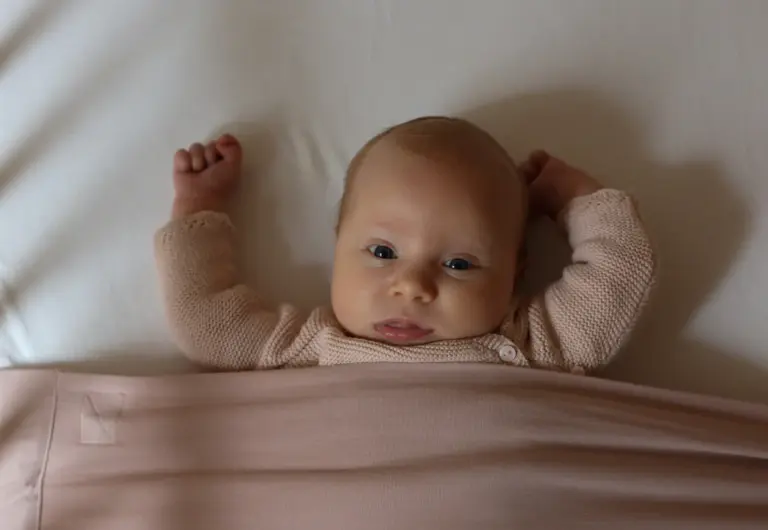
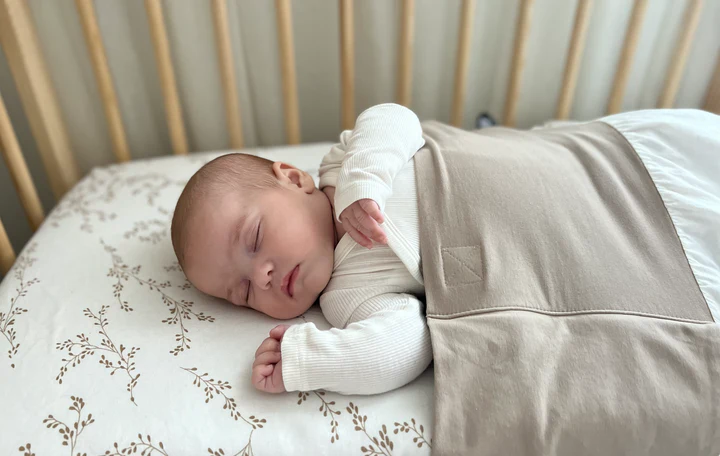
Bonus tip Ensure your baby feels safe and secure in bedA nervous baby can feel lost and alone in bed. By making the cot a pleasant place where your baby feels safe, leaving mum can become less scary. Tuck your baby in tightly or use the NUNKI fitted sheet for that snug, secure feeling your baby knows from the womb. This helps your little one relax and calm down, making it easier to fall asleep.
Lots of love,
Frederieke


 Nederlands
  English (UK)
  Deutsch
  Français